

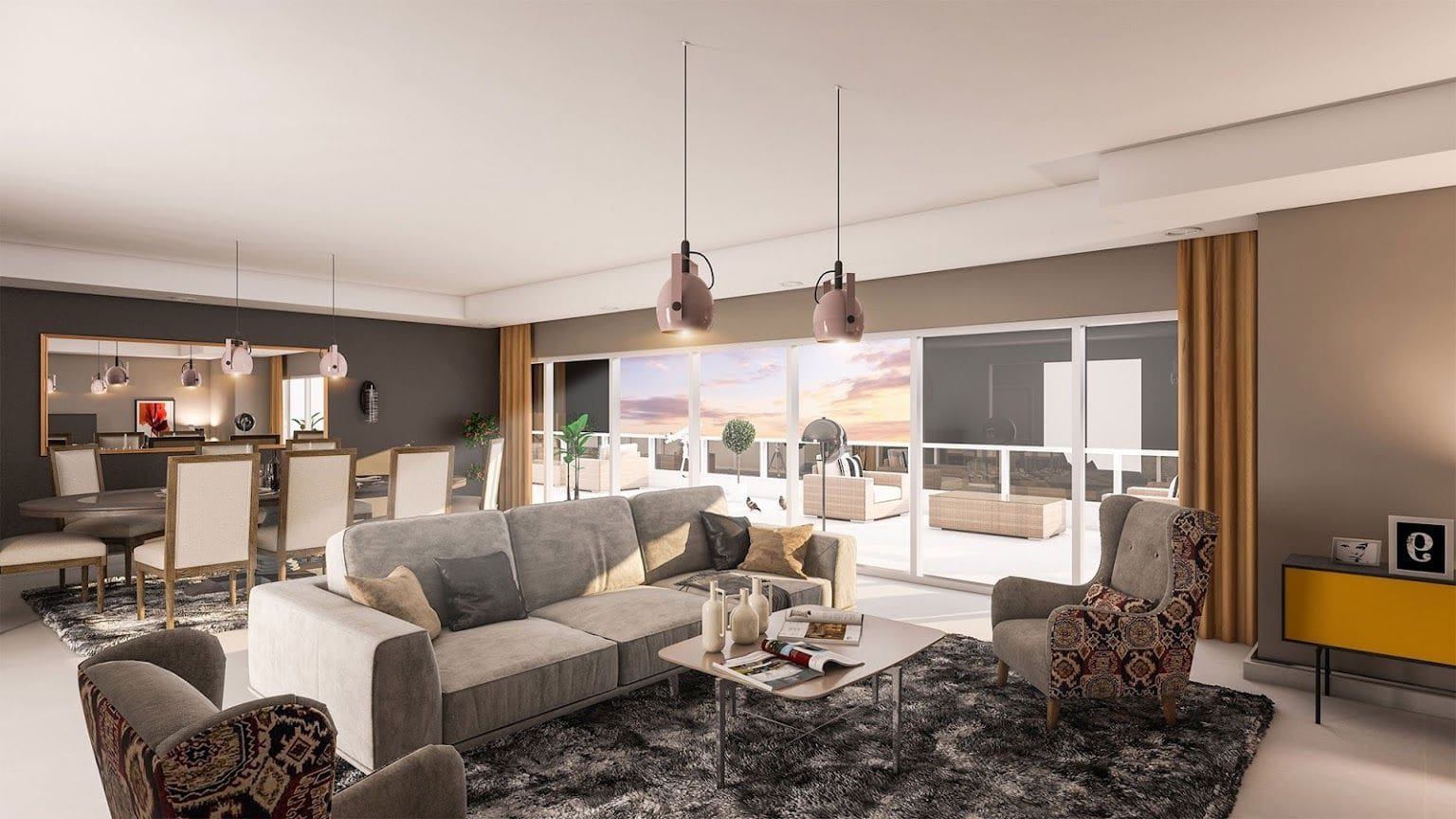
Top 10 Features Every Luxury Smart Home Should Have
Walk into any newly built villa on Palm Jumeirah or a high floor apartment in Downtown Dubai and you will notice something. The impressive part is rarely the technology itself. It is how little of it you actually see. The lights adjust before you think to reach for a switch. The temperature is already right when you walk in. Somewhere behind the walls, a system has been quietly doing its job.
That is really what separates a genuine luxury smart home from a house with a smart speaker and a couple of connected bulbs. Real home automation in Dubai villas and premium apartments is about a level of integration that most people only notice when it is missing.
After years of working on smart home automation projects across Dubai, from Palm Jumeirah mansions to private towers in the Al Jaddaf area, a pattern shows up again and again. The homes that feel effortless all share the same handful of features.
Here are the features of Luxury Smart Home –
1. A Single System Running Everything
The biggest mistake in home automation is stitching together five different apps for five different things, one for lights, another for the AC, a third for the gate. None of them talk to each other, and the “smart” home ends up feeling more complicated than a regular one.
A proper luxury smart home automation runs on a unified backbone, usually built on KNX, DALI, or a dedicated Building Management System (BMS). Everything from lighting and climate to blinds, security, and entertainment sits inside one ecosystem. That is what makes something like an “arriving home” scene possible: one command, and the lights, the AC, the music, and the blinds all shift together, without you touching a thing.
2. Lighting That Actually Understands Mood
Good lighting design is wasted if every fixture only has an on and off switch. Systems like Lutron, Basalte, or Zennio let each light be dimmed, grouped, and scheduled on its own, or as part of a bigger scene across the whole floor.
Bright, cool light for the morning. Warm, low light in the evening. A cinematic dim for movie night in the media room. None of it should require walking around flipping switches. It should already be set, or one tap away.
3. Security That You Can Actually Check From Anywhere
For high value properties, security is not optional, and it is not something you bolt on after the fact. The better setups combine alarm sensors from brands like Ajax, smart locks such as Yale, and surveillance cameras like Hikvision, all sitting inside one interface rather than three separate apps.
That means checking a camera feed, getting an alert if a door opens at 2am, or letting a housekeeper in remotely, all from a phone, whether the homeowner is asleep upstairs or on a flight to London.
4. Climate Control That Knows When Rooms Are Actually Used
Dubai heat is not gentle, and cooling costs can add up fast in a large villa if every room runs at full blast around the clock. Smart climate systems that track occupancy, room by room, can pre cool a space before someone walks in and pull back automatically in rooms that are empty.
It is a small change on paper, but over a full year, it shows up clearly on the utility bill, and it means no more walking into an ice cold guest bedroom nobody has entered in a week.
5. Whole Home Audio Without a Single Visible Speaker
Sound matters as much as light in a luxury interior, and it should never come at the cost of the design. Multi room audio setups, often built around a brand like Bose, paired with in ceiling or in wall speakers, let music move with you, from the entryway to the pool terrace, without a speaker box in sight.
Home cinemas and media rooms should sit on the same control system as everything else too, so “movie night” really can be a single tap, not a hunt for three separate remotes.
6. Access Control Without Physical Keys
Keys get lost, copied, and forgotten. Facial recognition entry, smart locks, and app based access solve that, and they add something keys never could: control. A homeowner can grant a contractor access for exactly one afternoon, or shut off a former staff member’s entry the moment they leave, all without changing a single lock.
For owners who split time between Dubai and another city, or manage more than one property, this alone can be worth the investment.
7. A Network Strong Enough to Actually Support All of This
Here is the part that rarely gets mentioned in glossy brochures, but it matters more than almost anything else on this list. None of the above works reliably without solid networking underneath it. Enterprise grade infrastructure, commonly built on Unifi, is what keeps cameras, sensors, voice assistants, and control panels all connected, with strong coverage reaching the garden, the basement gym, and the far end of a large floor plan, not just the living room.
Skip this part, and even the best lighting or security system will feel glitchy and unreliable.
8. Energy Monitoring That Shows Where Consumption Is Going
Sustainability has become part of the luxury conversation, not separate from it. Systems that track energy use in real time, tie into solar where it is available, and automatically balance output across HVAC, lighting, and pool equipment help cut waste without anyone having to think about it or sacrifice comfort to do it.
9. Control That Is Actually Simple to Use
None of this technology is worth much if only one person in the house knows how to use it. Whether it is a wall mounted touch panel, a mobile app, or voice control, the day to day experience should be simple enough for a guest or a teenager to figure out immediately, while still giving the homeowner deeper customization underneath.
10. Room to Grow
The smart home installed today should not need to be ripped out in five years when a new wing gets added or a guest house gets built. Good system architecture is built with room to expand from day one, whether that means adding new zones, integrating a newer technology, or extending automation to outdoor areas added later.
Skipping this step is one of the most common and most expensive mistakes homeowners make early on.
Conclusion
A luxury smart home in Dubai is not measured by how much technology is packed into it. It is measured by how invisible that technology becomes once it is running. Whether the setup is built around KNX automation, Lutron lighting, or Unifi networking, the goal never changes: a home that responds to the people living in it, quietly, whether that is a Palm Jumeirah mansion or a private residence in a Downtown tower.
Getting all of this right takes more than good hardware. It takes a team that understands both the design side and the technical side, and knows how to make dozens of systems work as one.
Frequently Asked Questions
What is the most important feature of a luxury smart home?
A unified automation system, one that connects lighting, climate, security, and entertainment into a single platform, matters more than any individual gadget. Without it, even expensive devices end up working in isolation.
How much does smart home automation cost in Dubai?
Costs vary widely depending on property size, the number of systems integrated, and the brands used, ranging from a single automated room to a full villa build. A proper consultation is the only reliable way to scope this out.
Can an existing villa be retrofitted with smart automation?
Yes. While new builds make wiring easier, most existing villas and apartments in Dubai can be retrofitted with a mix of wired and wireless smart systems, depending on the structure and finish level.
Subscribe to our
newsletter.
Get valuable strategy, culture, and brand insights straight to your inbox.
By signing up to receive emails from Motto, you agree to our Privacy Policy. We treat your info responsibly. Unsubscribe anytime.