

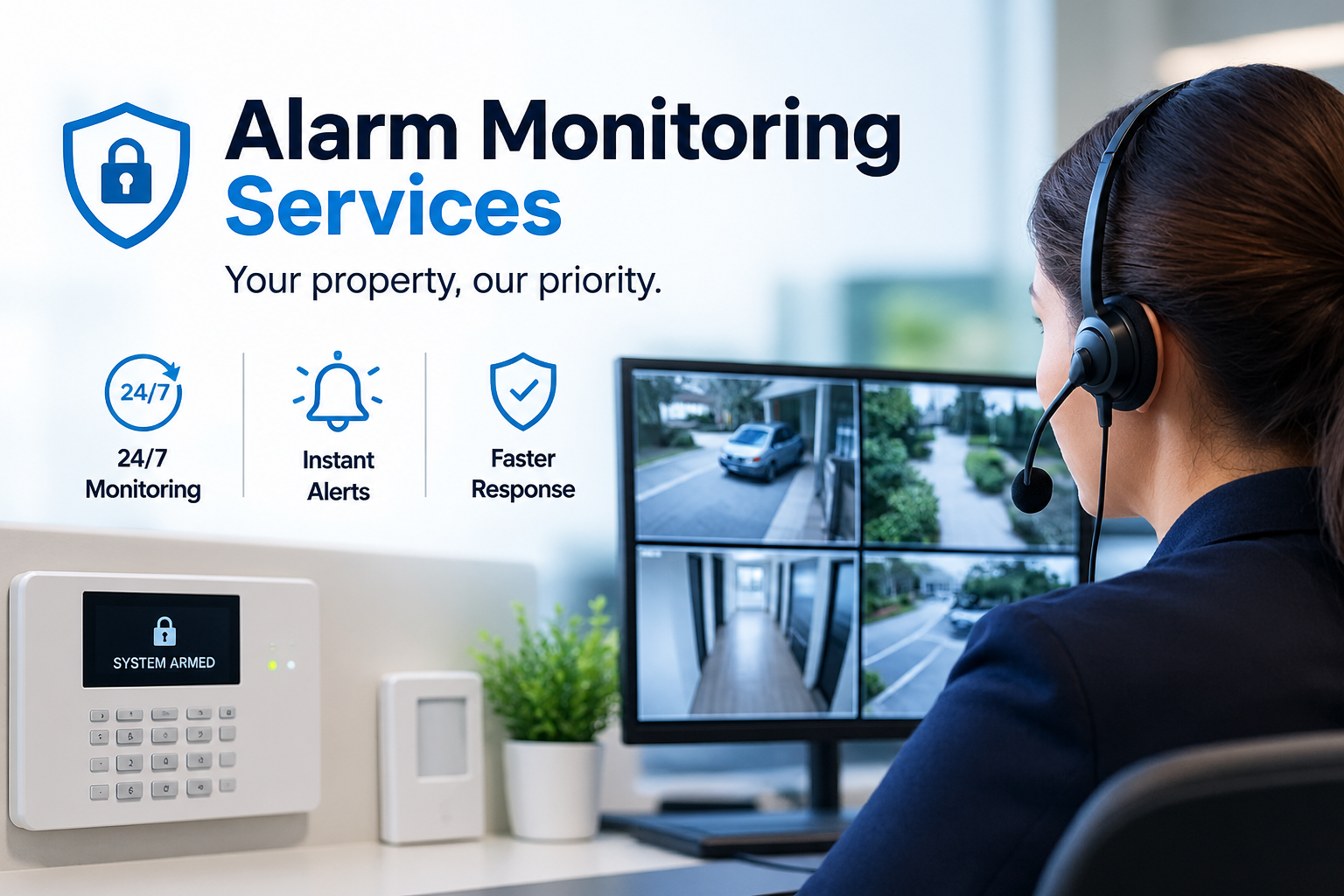
How Alarm Monitoring Services Protect Luxury Villas in the UAE
A monitored alarm turns a luxury villa from a property that makes noise during a break-in into one that gets a trained response within minutes, around the clock, even when the owners are abroad for the summer.
Why luxury villas in the UAE need more than a basic alarm
A standalone siren protects a villa only if someone hears it and acts on it. In the UAE’s villa communities, that often does not happen.
Large plots, high boundary walls and private gardens muffle sound and block sight lines. Many owners also spend weeks away each year, and staff come and go on irregular schedules. A siren going off in an empty compound in Emirates Hills, Palm Jumeirah or Saadiyat Island may ring for minutes before anyone responds.
Luxury villas also hold concentrated value: jewellery, watches, art, cash, electronics and vehicles. That makes them a deliberate target, and thieves who plan a break-in usually know how long a typical response takes.
Professional alarm monitoring closes that gap of Villa security. Instead of relying on neighbours or a mobile notification you might miss, every alert is received by a trained operator who verifies it and escalates it immediately.
How 24/7 alarm monitoring works
A monitored system sends every alarm signal to a staffed central monitoring station, not just to a siren or a phone app. The sequence is the same whether the trigger is a forced door, a glass break or a panic button:
- Detection. A door contact, motion sensor, glass-break detector or perimeter sensor trips, and the control panel sends a signal over cellular, internet or both.
- Receipt. The monitoring station receives the signal within seconds and shows the operator which villa, which zone and what type of event.
- Verification. The operator checks the event, usually by reviewing live camera footage, listening in through the panel, or calling the owner and house manager with a pre-agreed passcode.
- Dispatch. If the alarm is confirmed, the operator contacts the police or the on-site security team and, where contracted, sends a private response patrol.
- Follow-up. The operator keeps the owner informed, logs the event with times and actions, and stays on the line until the incident is closed.
Because the station is staffed 24 hours a day, 365 days a year, the response does not depend on the owner being awake, reachable or even in the country.
What a monitored system covers
A well-designed villa system protects the perimeter, the building shell, the interior and the people inside. Each layer catches a different stage of an intrusion or emergency.
| Layer | Typical devices | What it protects against |
|---|---|---|
| Perimeter | Beam sensors, fence and gate contacts, outdoor cameras | Intruders climbing walls or entering the garden before reaching the house |
| Building shell | Door and window contacts, glass-break detectors | Forced entry through doors, patio sliders and windows |
| Interior | Motion detectors, pet-friendly sensors, safe-room and vault contacts | Intruders who bypass the shell, and theft from high-value rooms |
| Personal safety | Wireless panic buttons, wearable pendants, bedroom keypads | Home invasion, medical emergencies and domestic staff incidents |
| Environmental | Smoke, heat, gas and water-leak sensors | Fire, gas leaks and flooding, including while the villa is empty |
| Remote health | Panel tamper alerts, power and connection monitoring | Someone cutting power or jamming communications |
The last row matters more than most owners realise. A good monitoring service watches the system itself, so a dead battery, a cut line or a tampered panel raises an alert instead of silently leaving the villa exposed.
Video verification and smart home integration
The biggest improvement in recent years is video verification. When a sensor trips, the operator pulls up the cameras linked to that zone and sees what is happening before deciding how to respond.
This helps in two ways. Confirmed intrusions get a faster, better-informed response, because the dispatcher can describe the number of people, their location and their direction of travel. False alarms caused by a pet, a gust of wind or a housekeeper arriving early are cleared quickly without a wasted callout.
Modern monitoring also connects to the rest of a smart villa. Depending on the setup, an alarm can:
- Turn on all lights and outdoor floodlights to deter intruders
- Lock smart doors and close gates or garage doors
- Trigger audio warnings through outdoor speakers
- Sync with access control, so the operator can see who entered and when
- Send live clips and event summaries to the owner’s phone
For owners who travel, this means the villa can be watched, understood and controlled from anywhere, with a human operator behind every automated step.
UAE rules and licensing to check before you hire
Security services in the UAE are regulated at emirate level, so the provider you choose should hold a current licence from the authority that covers your villa. In Dubai, that authority is the Security Industry Regulatory Agency (SIRA); other emirates have their own police or security regulators.
Three checks protect you:
- Licence and approvals. Ask for the provider’s trade and security licences, and confirm that the alarm equipment and monitoring arrangement meet local requirements.
- Camera placement. Cameras should cover your own property, not neighbours’ gardens or public roads, and should follow local privacy rules.
- Data handling. Footage and access logs are personal data. Ask where they are stored, who can view them and how long they are kept.
Regulations and approval processes change, so confirm current requirements with the relevant authority or your community management before signing a contract.
How to choose a monitoring provider
Use this checklist when comparing companies. A provider that cannot answer these clearly is not ready to protect a luxury villa.
- Licensed for security and alarm monitoring in your emirate
- Staffed monitoring station operating 24/7, with a backup site or failover
- Stated average response time from alarm receipt to operator action
- Video verification and two-way audio supported
- Dual-path communication (cellular plus internet) with automatic failover
- Private response patrol or a clear escalation route to the police
- Compatibility with your existing smart home, cameras and access control
- Multilingual operators, including English and Arabic
- Clear contract on fees, equipment ownership, cancellation and data use
- Regular system testing, maintenance and incident reports
Ask for a site survey before you commit. A good provider walks the villa and plot, maps blind spots and designs the system around how your household lives, instead of quoting a standard package.
FAQs for villa owners
How fast does a monitoring station respond to a villa alarm?
Most stations aim to act on a signal within seconds to a minute, because operators verify and escalate straight away. Ask any provider for its stated response times in writing.
Is alarm monitoring worth it if I already have CCTV?
Yes. Cameras record what happened, while monitoring means someone watches the alerts and acts on them at the moment they occur. The strongest setups combine both.
Does monitoring work when I am travelling abroad?
Yes. The station handles alerts, contacts your nominated key holders and keeps you updated wherever you are.
Can monitoring work if the power or internet goes down?
A well-designed system has a backup battery and a second communication path, usually cellular, so it keeps reporting during outages. Tamper and loss-of-connection alerts also notify the station.
Can the system protect domestic staff and family as well as the property?
Yes. Panic buttons, wearable pendants and fire and gas detectors send medical, fire and duress alerts to the same station.
Will pets set off false alarms?
Pet-friendly sensors and video verification greatly reduce false alarms, and operators clear most remaining ones quickly.
Conclusion
For a luxury villa in the UAE, alarm monitoring is the difference between being notified of a problem and having it handled. Layered sensors, video verification, backup communications and a staffed station working around the clock give owners protection that works whether they are home or abroad.
If you are planning or upgrading villa security, start with a licensed provider’s site survey. Ask how they would verify an alarm, how fast they respond and who they call, then compare the answers using the checklist above.
Subscribe to our
newsletter.
Get valuable strategy, culture, and brand insights straight to your inbox.
By signing up to receive emails from Motto, you agree to our Privacy Policy. We treat your info responsibly. Unsubscribe anytime.