

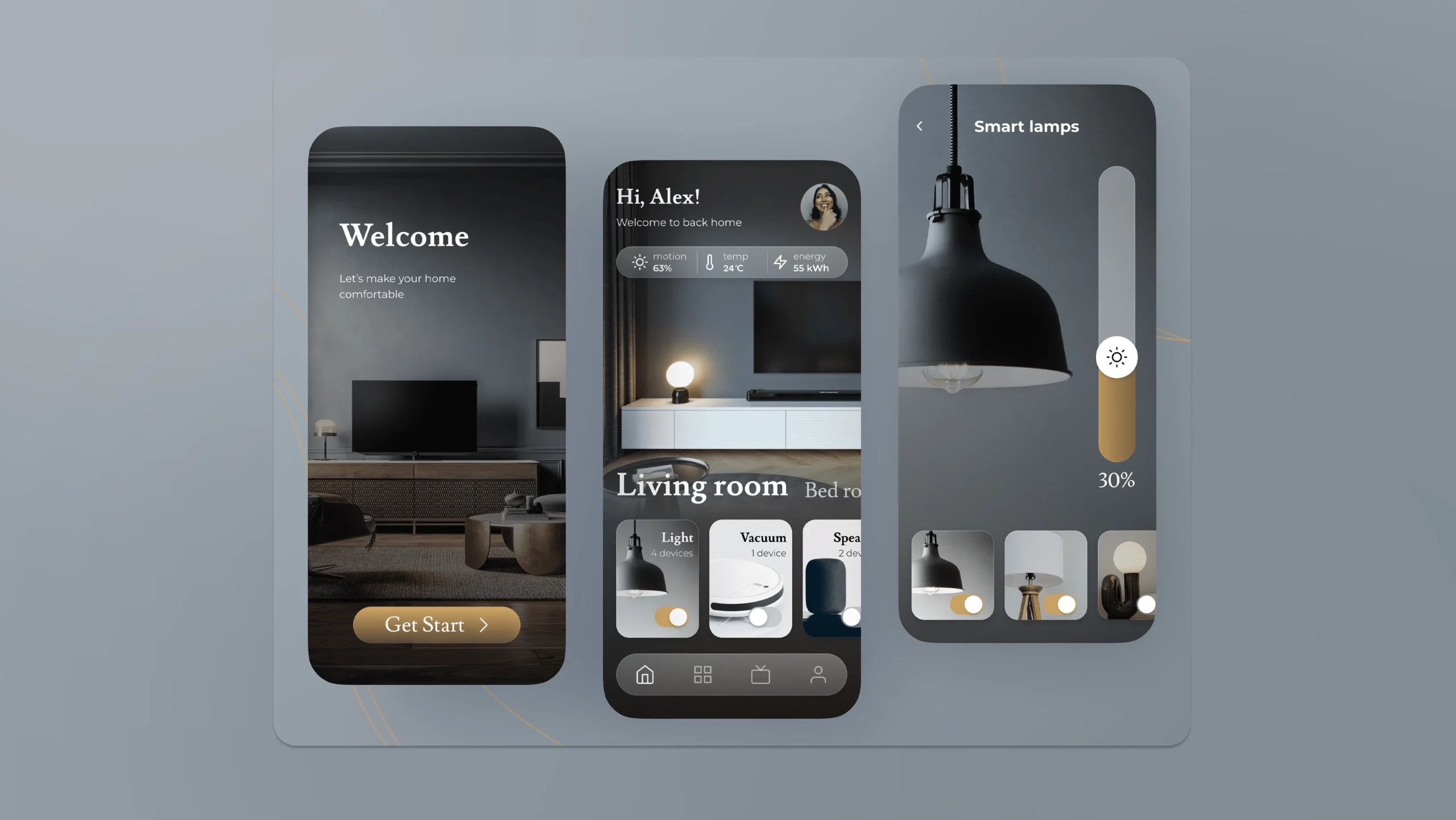
Luxury Villa Lighting Design and Control in Dubai: Planning, Dimming and Automation
A luxury villa needs more than attractive light fittings. The right lighting makes architectural details stand out, supports different activities throughout the day, and helps each room feel comfortable and considered. In Dubai, where villas often combine open-plan living areas, landscaped outdoor spaces, high ceilings, and statement interiors, lighting design should be planned alongside the electrical and smart home systems.
The most effective approach is to plan lighting, dimming, and automation together from the beginning. This allows you to choose suitable fittings, group lights logically, create useful lighting scenes, and avoid costly changes once ceilings, walls, and finishes are complete.
Whether you are building a new villa, renovating an existing property, or upgrading to smart home technology, this guide explains what to consider when planning luxury villa lighting design and control in Dubai.
Quick Answer: How Should You Plan Luxury Villa Lighting?
Start by identifying how each room will be used, then combine ambient, task, and accent lighting to create a balanced design. Choose compatible dimmable fixtures and drivers, divide lights into practical control zones, and decide whether you need conventional dimmers or a smart lighting system.
For larger villas, plan lighting automation alongside electrical drawings and interior design. Systems such as KNX and DALI may be appropriate for particular projects, depending on the required functions and equipment compatibility. Before installation, confirm the control method, dimming performance, wiring requirements, and scene settings with your lighting designer and installer.
What Is Luxury Villa Lighting Design and Control?
Luxury villa lighting design considers how light interacts with a property’s architecture, furnishings, materials, and everyday activities. Lighting control determines how those lights are operated, adjusted, and coordinated.
These are connected but different parts of a project.
- Lighting design determines the position, type, direction, colour appearance, and intended effect of each light.
- Dimming adjusts light output to suit different needs and times of day.
- Lighting control allows users to operate individual lights or groups through switches, keypads, touch panels, or apps.
- Lighting automation allows lights to respond to selected scenes, schedules, occupancy, daylight conditions, or other configured inputs.
For example, a villa’s living room might use concealed cove lighting, recessed downlights, and accent lights to highlight artwork. A smart control system can coordinate these circuits so the owner can choose a bright setting for cleaning, a softer setting for entertaining, or a low-level setting for watching television.
The objective is not to automate every light simply because the technology is available. It is to create a lighting system that looks good, works reliably, and remains straightforward to use.
The Three Layers of Villa Lighting
A balanced lighting plan usually combines three layers. Each has a different purpose, and the best results come from designing them to work together.
1. Ambient lighting
Ambient lighting provides general illumination. Depending on the room, it may come from recessed downlights, indirect cove lighting, ceiling fixtures, or concealed linear lights.
In a large Dubai villa, avoid relying on a dense grid of downlights as the only source of illumination. It can create a flat appearance and make decorative features less noticeable. Combining indirect lighting with carefully positioned fixtures often gives the space more depth.
2. Task lighting
Task lighting illuminates areas where people need to see clearly while carrying out specific activities.
Examples include:
- Pendant or under-cabinet lighting above kitchen worktops.
- Reading lights beside beds and lounge chairs.
- Focused illumination over bathroom mirrors.
- Dedicated lighting for wardrobes, dressing areas, and study desks.
The position and brightness should suit the task. In a kitchen, for instance, lighting should illuminate the work surface rather than leave the user working in their own shadow.
3. Accent lighting
Accent lighting draws attention to selected features, such as artwork, textured walls, shelving, architectural columns, or landscaping.
Wall washers, adjustable spotlights, and concealed LED strips can all be useful, depending on the surface and desired effect. Beam angle, glare, distance, and fixture placement matter as much as the fitting’s appearance.
Practical tip: Design the three layers separately before deciding which lights should operate together. This makes it easier to create distinct moods without sacrificing useful illumination.
Lighting design for different villa spaces
Each room has its own lighting requirements. A consistent design language helps the villa feel cohesive, but the brightness, colour appearance, beam direction, and control method should reflect how each space is used.
Living rooms and formal lounges
Living rooms often need to accommodate several activities, from family time to entertaining guests. Combine ambient lighting with accent lights for feature walls, artwork, shelving, or architectural details.
Create separate control groups for the main ceiling lights, cove lighting, and decorative features. This lets you adjust the atmosphere without switching everything on or off together.
Kitchens and dining areas
Kitchens require useful task lighting alongside decorative illumination. Under-cabinet lights can brighten worktops, while pendants can define an island or dining table.
Consider separate controls for work surfaces, general ceiling lights, and dining-area lighting. Check that pendants do not create glare when people are seated, and ensure dimming does not compromise visibility during food preparation.
Bedrooms and dressing rooms
Bedrooms benefit from flexible lighting, particularly around beds, wardrobes, and dressing tables. Use independent bedside controls where possible so each person can operate their own reading light without illuminating the whole room.
Wardrobe lighting should make clothing colours easy to distinguish. For dressing areas, pay attention to colour rendering and the direction of light around mirrors.
Bathrooms and spa-inspired spaces
Bathroom lighting should balance practical visibility with a softer atmosphere for relaxing. Mirror lighting, ceiling lights, and decorative niches may need separate controls.
Select fittings with suitable protection ratings for their installation locations and follow applicable electrical and wet-area requirements. Lighting near water should be specified and installed by qualified professionals.
Gardens, terraces, and swimming pools
Outdoor lighting can highlight landscaping, pathways, façades, seating areas, and architectural features. Use fittings designed for the relevant outdoor conditions, and plan their positions to avoid unnecessary glare into neighbouring properties or indoor spaces.
Outdoor circuits should also be considered within the wider automation plan. For example, a single Entertain scene could activate selected terrace lighting while leaving decorative garden lights at a lower level.
Why dimming matters
Dimming is one of the most useful features in luxury villa lighting because it lets a room serve different purposes without changing its physical layout.
A dining room might need brighter illumination during a family meal and softer lighting for an evening gathering. A bedroom may need full brightness when getting dressed but a low-level setting at night.
However, not every LED light dims correctly with every dimmer. Compatibility needs to be checked before equipment is purchased or installed.
When planning dimmable lighting, confirm the following:
- Driver compatibility: The LED driver and control equipment must support the intended dimming method.
- Minimum dimming level: Some combinations dim smoothly to very low output, while others stop at a higher brightness.
- Flicker and noise: Test for visible flicker, buzzing, or inconsistent behaviour across the intended dimming range.
- Colour consistency: Check whether the light’s colour appearance changes as brightness decreases.
- Load limits: Confirm that the dimmer or control channel supports the connected load and any manufacturer-specified restrictions.
Ask for a sample fitting or mock-up when the project includes multiple fixture types or demanding architectural details. Testing before installation can prevent problems that are difficult to correct once ceilings and finishes are complete.
Smart lighting control and automation options
The right control system depends on the property’s size, wiring, lighting design, and integration requirements.
Conventional dimmers and smart switches
Standalone dimmers or smart switches may be suitable for smaller projects with relatively straightforward lighting requirements. They can provide useful control without requiring a comprehensive building automation system.
Before choosing this approach, consider whether you may later want coordinated lighting scenes, centralised control, motorised curtains, or integration with other home systems.
KNX lighting control
KNX is a building automation standard used to coordinate compatible lighting and other building systems. It can be suitable for larger villas that need multiple circuits, keypads, sensors, and coordinated scenes.
For example, a single keypad button could be configured to dim the living room, adjust selected decorative lights, and operate compatible shading equipment. The exact functions depend on the system design and connected devices.
Read more about KNX home automation for luxury villas.
DALI lighting control
DALI is a digital lighting control protocol designed for compatible lighting equipment. It can be useful where individual fixture addressing, grouped lighting, and detailed control are important.
KNX and DALI serve different roles and can work together through suitable interfaces. A project designer should specify which functions belong to each system rather than assuming that all fittings and controls are automatically compatible.
Explore this comparison of KNX, DALI, and wireless smart home systems.
App, keypad, and voice control
A well-designed system should not depend on a phone for every basic action. Wall keypads provide quick access to familiar functions, while apps can offer additional adjustments and remote access where supported.
Voice control may be useful for selected tasks, but it should complement—not replace—reliable everyday controls. Choose an interface that family members, guests, and household staff can use easily.
Planning lighting scenes
Lighting scenes combine multiple settings into one command. Instead of adjusting several circuits individually, the homeowner selects a preset designed for a particular activity.
Here are examples that may suit a luxury villa:
| Scene | Possible lighting response |
|---|---|
| Welcome | Activate selected entrance, foyer, and living-area lights |
| Entertain | Balance decorative lighting with comfortable ambient illumination |
| Dining | Highlight the dining table while reducing other light levels |
| Movie | Dim selected living-room lights and switch off distracting circuits |
| Night | Keep essential circulation lights at a low level |
| Away | Switch off selected indoor lights and activate configured security-related lighting |
These are illustrative examples, not automatic features of every system. Each scene needs to be programmed and tested for the actual property.
Keep scene names intuitive, and provide a way to override automation manually. If the homeowner cannot easily understand or adjust a scene, even an advanced installation may become frustrating to use.
Dubai-specific lighting considerations
Luxury villa projects in Dubai can involve large glazed façades, high ceilings, strong sunlight, landscaped outdoor areas, and extensive air-conditioned interiors. These factors should influence the lighting design.
Manage daylight and glare. Rooms with large windows may receive substantial natural light during the day. Consider how direct sunlight affects screens, artwork, reflective surfaces, and seating positions. Compatible motorised shading can be coordinated with lighting where useful.
Choose fittings for the environment. Outdoor, poolside, and exposed areas require equipment appropriate to the location and environmental conditions. Confirm the relevant protection ratings and installation requirements rather than relying on appearance alone.
Coordinate lighting with interior finishes. Dark surfaces absorb more light than light-coloured surfaces, while glossy materials can produce unwanted reflections. Review the actual finishes when specifying fixture positions and output.
Plan early with other trades. Lighting positions, ceiling details, joinery, HVAC grilles, sensors, and curtain pockets may compete for the same space. Coordinate these elements before construction reaches the finishing stage.
Consider maintenance access. Drivers, control modules, and serviceable components should remain accessible. A beautiful concealed installation is less practical if routine maintenance requires major ceiling work.
Common planning mistakes to avoid
Several avoidable decisions can undermine a carefully designed villa lighting system.
- Choosing fittings before defining the lighting plan: Attractive fixtures may not provide the right distribution or beam angle for the space.
- Using too many downlights: More fixtures do not automatically mean better illumination. Poor spacing can cause glare and an overly uniform appearance.
- Assuming all LEDs are dimmable: Verify the compatibility of the full fixture, driver, and control combination.
- Ignoring future automation: If smart controls are a long-term goal, discuss wiring, panels, control protocols, and expansion requirements before installation.
- Combining too many lights on one switch: Group lights according to how people actually use the room.
- Skipping commissioning: Test dimming ranges, keypad labels, scenes, and manual overrides before handover.
A documented lighting schedule and control plan can help the architect, electrician, lighting supplier, and automation integrator work from the same requirements.
How to choose a villa lighting automation company
When comparing companies for luxury villa lighting design and control in Dubai, look beyond the product catalogue. Ask how the provider approaches design, compatibility, programming, and support.
- Review the design process. Ask whether lighting layouts and calculations are prepared and coordinated with the interior design.
- Request a clear scope. The proposal should explain what is included in fixture supply, wiring, control equipment, programming, testing, and handover.
- Check system compatibility. Confirm that the selected fittings, drivers, dimmers, keypads, and automation interfaces work together.
- Ask about scene programming. Understand how the company will translate your daily routines into practical lighting controls.
- Discuss future servicing. Clarify who can make changes to scenes, troubleshoot faults, and support the system after installation.
For a broader overview, visit Ultitrent’s smart home automation solutions in Dubai.
Conclusion: Design the lighting and controls as one system
Luxury villa lighting works best when the visual design and the control system are planned together. Layered illumination creates depth, suitable dimming makes rooms more adaptable, and carefully designed automation simplifies everyday use.
For a villa in Dubai, coordinate lighting with architecture, interior finishes, daylight, outdoor spaces, and other smart home systems early in the project. Give equal attention to fixture quality, control compatibility, commissioning, and ease of use.
If you are planning a new villa or upgrading an existing property, contact Ultitrent to discuss your luxury villa lighting design and control requirements. The right approach starts with understanding your spaces, preferred atmosphere, and day-to-day routines.
Frequently asked questions
1. What is the best lighting control system for a luxury villa in Dubai?
There is no single best system for every property. Conventional dimmers may suit simpler installations, while KNX, DALI, or a combination of compatible systems may be appropriate for larger projects with more circuits and detailed control requirements.
2. Can existing villa lighting be upgraded to smart lighting?
Yes, in many cases. The options depend on the existing wiring, switch arrangement, fixture and driver compatibility, and the level of automation required. A site assessment can establish whether smart switches, replacement controls, or more extensive upgrades are suitable.
3. Can I dim all LED lights?
No. LEDs need compatible dimming equipment, and performance varies between products. Check the manufacturer’s compatibility information and test the intended combination where possible.
4. What is the difference between KNX and DALI?
KNX is a building automation standard that can coordinate compatible systems across a property. DALI is a digital protocol focused on lighting control. They can be integrated when the equipment and system design support it.
5. How do lighting scenes work?
A scene stores predefined settings for selected lighting circuits or devices. For example, a Movie scene might dim cove lighting and switch off selected ceiling lights with one keypad press.
6. Should lighting automation be planned before construction?
Ideally, yes—especially for new villas and major renovations. Early planning helps coordinate wiring, ceiling layouts, fixtures, control panels, and other building systems. Some upgrades can be completed later, but options may be more limited.
7. Can lighting respond automatically to daylight or occupancy?
Yes, if compatible sensors and controls are included and configured. For example, a sensor may activate pathway lighting when movement is detected, or a daylight-control system may adjust selected lights according to available natural light.
8. What should a villa lighting design proposal include?
Ideally, it should include lighting layouts, fixture specifications, circuit and control schedules, dimming compatibility, proposed scenes, system interfaces, commissioning, and handover requirements. The exact scope depends on the project.
Subscribe to our
newsletter.
Get valuable strategy, culture, and brand insights straight to your inbox.
By signing up to receive emails from Motto, you agree to our Privacy Policy. We treat your info responsibly. Unsubscribe anytime.