

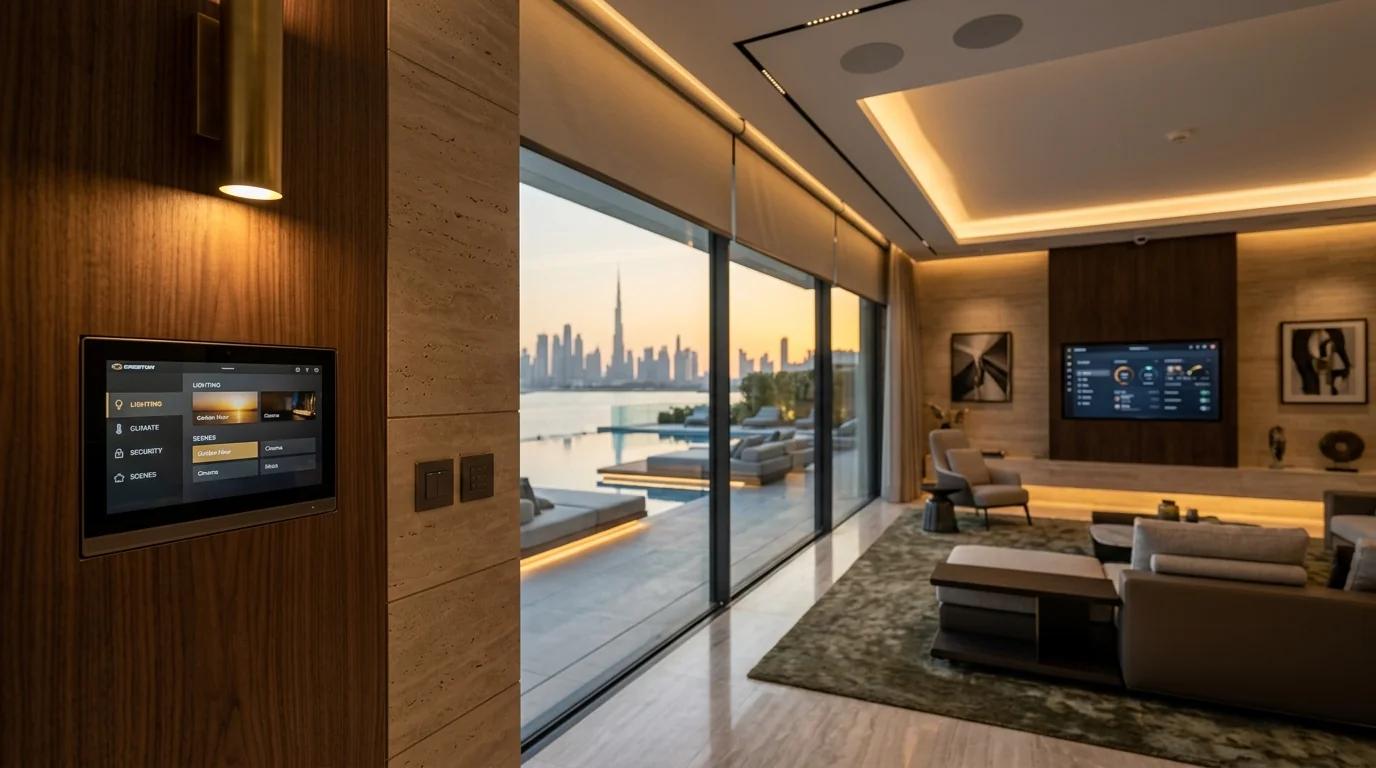
What Are the Most Advanced Home Automation Solutions in Dubai?
TL;DR
The most advanced home automation solutions in Dubai combine AI-powered technology, intelligent controls, and connected devices to create more comfortable, secure, and efficient living spaces.
Key smart home technologies include:
- AI-Powered Automation: Personalised home settings and intelligent routines.
- Smart Lighting: Automated brightness, lighting scenes, and occupancy-based controls.
- Smart Climate Control: Intelligent AC management, temperature scheduling, and room-based cooling.
- Smart Security: Connected surveillance cameras, smart locks, motion sensors, and remote monitoring.
- Automated Curtains: Motorised blinds and curtains controlled through schedules, apps, or voice commands.
- Smart Home Theatre: Integrated entertainment, surround sound, automated screens, and multi-room audio.
- Voice Control: Hands-free operation through compatible Alexa, Google Home, and Apple Home devices.
- Energy Management: Smart monitoring, automated lighting, and optimised cooling schedules.
- Smart Access Control: Keyless entry, video intercoms, and automated garage doors.
- KNX and Matter Integration: Advanced technologies that help connect compatible smart home devices and systems.
Dubai is known for its luxury lifestyle, innovative architecture, and rapid adoption of advanced technologies. From contemporary apartments and premium penthouses to spacious villas, homeowners are increasingly looking for smarter ways to manage their living spaces. This growing demand has made home automation solutions in Dubai an important part of modern residential design.
Today’s smart homes offer much more than controlling lights through a smartphone. Advanced home automation systems can connect lighting, air conditioning, curtains, security cameras, door locks, entertainment systems, and other household devices into one integrated environment. With the help of artificial intelligence (AI), voice control, intelligent sensors, and connected technologies, homeowners can create living spaces that respond to their routines and preferences.
Whether you are building a new villa, renovating an apartment, or upgrading an existing property, investing in the right smart home technology can improve convenience, comfort, security, and energy management.
But what are the most advanced home automation solutions available in Dubai, and which technologies are worth considering?
Let’s explore the leading smart home solutions transforming modern residential properties.
What Are Home Automation Solutions?
Home automation refers to the integration of connected devices, sensors, software, and control systems that allow homeowners to manage different household functions automatically or remotely.
Instead of operating every device separately, an integrated home automation system connects multiple technologies through a central controller, smartphone application, touchscreen panel, or voice assistant.
For example, a homeowner can create a customised evening setting that automatically:
- Dims the living room lights.
- Closes motorised curtains.
- Adjusts the air conditioning.
- Activates the preferred entertainment system.
- Sets the security system according to the household’s requirements.
These functions can operate together through predefined scenes, schedules, sensors, or intelligent automation rules.
In Dubai, where modern homes often include extensive lighting, large windows, sophisticated entertainment systems, and substantial cooling requirements, integrated automation can make everyday living more convenient and manageable.
10 Most Advanced Home Automation Solutions in Dubai
The latest smart home technologies combine intelligent control, automation, connectivity, and personalised experiences. Here are ten advanced solutions worth considering for modern Dubai properties.
1. AI-Powered Smart Home Automation
Artificial intelligence is changing how homeowners interact with connected devices. Traditional automation follows predefined instructions, while AI-powered systems can use patterns, preferences, and contextual information to make interactions more personalised.
For example, an intelligent home system may learn your preferred lighting levels, temperature settings, and entertainment routines. Depending on the capabilities of the platform, it can recommend or trigger adjustments based on schedules, occupancy, and other available inputs.
Key features include:
- Personalised lighting and temperature preferences.
- Intelligent automation based on routines.
- Occupancy-based device control.
- Predictive maintenance alerts where supported.
- Integration with compatible voice assistants.
- Context-aware automation through supported platforms.
For Dubai homeowners, AI-assisted automation can help create a more responsive home environment while reducing the need for repeated manual adjustments.
However, not every system marketed as AI-powered offers the same capabilities. It is important to check whether the platform supports genuine adaptive automation or simply uses predefined schedules and routines.
2. Intelligent Lighting Control Systems
Smart lighting is one of the most practical and visually impressive home automation solutions. It allows homeowners to control brightness, colour temperature, lighting schedules, and scenes from a smartphone, touchscreen, or voice assistant.
Advanced lighting systems can also coordinate multiple rooms and lighting zones.
For example, homeowners can create different lighting scenes for different activities:
- Welcome Mode: Activates selected entrance and living area lights when arriving home.
- Movie Mode: Dims the lights and prepares the home theatre environment.
- Relaxation Mode: Creates softer lighting for bedrooms and living spaces.
- Night Mode: Turns off unnecessary lights while maintaining selected pathway lighting.
- Away Mode: Simulates occupancy using scheduled lighting.
Motion sensors and daylight sensors can further automate lighting based on room occupancy and natural light levels.
For luxury villas and apartments in Dubai, intelligent lighting can improve the overall atmosphere while providing more flexible control over indoor and outdoor lighting.
3. Smart Air Conditioning and Climate Control
Climate control is particularly important in Dubai because of its hot weather and extended cooling requirements. Smart air conditioning systems allow homeowners to manage indoor temperatures through connected thermostats, compatible HVAC controllers, sensors, and automation platforms.
Instead of adjusting every air conditioning unit manually, an integrated system can coordinate temperature settings across different rooms or zones.
Advanced climate automation features include:
- Individual room temperature control.
- Programmable cooling schedules.
- Remote AC management.
- Temperature and humidity monitoring.
- Occupancy-based temperature adjustments.
- Integration with selected smart home platforms.
- Automated control based on predefined comfort settings.
For example, the air conditioning can follow a schedule that prepares the bedroom before bedtime or adjusts cooling when selected areas are unoccupied.
The system can also help avoid unnecessary cooling by using occupancy information and carefully configured temperature schedules.
When selecting a solution, homeowners should ensure compatibility with their existing HVAC equipment, whether it uses split AC units, ducted systems, or centralised cooling.
4. Smart Security and Surveillance Systems
Home security is another major reason homeowners invest in advanced automation. Modern smart security solutions combine surveillance cameras, motion sensors, smart locks, video doorbells, and alarm systems within a connected environment.
These technologies allow homeowners to monitor their properties and receive alerts through compatible mobile applications.
Popular smart security features include:
- HD and 4K security cameras, depending on the system.
- Smart video doorbells.
- Motion and intrusion detection.
- Smart door locks and access control.
- Remote property monitoring.
- Automated security notifications.
- Integration with lighting and other automation systems.
For example, when a compatible motion sensor detects unexpected activity, the system can send a notification and activate selected outdoor lights.
Smart locks can also provide controlled access through supported PIN codes, mobile applications, or other authentication methods.
For Dubai villas, apartments, and larger residential properties, integrated security can make property monitoring more convenient. Homeowners should also consider encryption, secure authentication, software updates, and local privacy requirements when choosing connected security devices.
5. Automated Curtains and Blinds
Motorised curtains and blinds are becoming increasingly popular in contemporary Dubai homes, particularly in villas, penthouses, and properties with large glass windows.
These systems allow homeowners to open or close window coverings using smartphone applications, wall controls, voice commands, or scheduled automation.
They can also be integrated with lighting and climate control.
For example, curtains can close during selected daytime hours to reduce direct sunlight entering a room. They can also open gradually in the morning or close automatically as part of an evening scene.
Key benefits include:
- Convenient control of multiple windows.
- Scheduled opening and closing.
- Integration with smart lighting.
- Improved management of natural daylight.
- Coordination with compatible climate systems.
- Greater convenience for hard-to-reach windows.
In Dubai, where sunlight and heat can affect indoor comfort, automated window coverings can support more effective daylight and cooling management when properly configured.
6. Smart Home Theatre and Multi-Room Audio Systems
Modern home entertainment is no longer limited to a television and a conventional sound system. Advanced home theatre automation combines audiovisual equipment, acoustic design, lighting, motorised screens, and centralised controls.
Homeowners can create dedicated cinema rooms or integrate entertainment throughout different areas of their property.
Advanced home entertainment features include:
- 4K and 8K-compatible display systems, depending on the equipment.
- Surround sound and immersive audio.
- Dolby Atmos-compatible configurations.
- Motorised projector screens.
- Automated lighting scenes.
- Multi-room audio distribution.
- Centralised AV control.
- Integration with smart home applications.
For example, activating a Movie Mode can dim the lights, lower the projector screen, select the preferred audio input, and prepare compatible equipment for viewing.
Multi-room audio systems also allow homeowners to enjoy music in different rooms while managing individual zones through one interface.
For homeowners who value premium entertainment experiences, combining home theatre technology with wider home automation creates a more seamless and convenient environment.
7. Voice-Controlled Smart Home Systems
Voice control allows homeowners to operate compatible smart devices through spoken commands. It reduces the need to use separate applications or physical switches for everyday functions.
Popular voice assistant ecosystems include Amazon Alexa, Google Home, and Apple Home.
Depending on device compatibility and system configuration, homeowners can use voice commands to:
- Switch lights on or off.
- Adjust compatible thermostats.
- Open or close motorised curtains.
- Play music.
- Control selected entertainment devices.
- Activate predefined home scenes.
- Check supported security devices.
For example, a simple command such as “Good night” can activate a scene that switches off selected lights, closes compatible curtains, and adjusts the temperature.
Voice automation is particularly useful when integrated with a centralised home automation platform. Homeowners should check language support, device compatibility, and privacy settings before choosing a voice-controlled ecosystem.
8. Smart Energy Management and Monitoring
Energy management is an increasingly important consideration for homeowners in Dubai. Advanced smart home systems can monitor selected energy-consuming devices, automate schedules, and provide insights into household electricity usage.
Rather than simply switching devices on and off, an energy management system can help homeowners understand when and where energy is being consumed.
Useful features include:
- Smart energy monitoring.
- Connected power management.
- Automated lighting schedules.
- Intelligent AC scheduling.
- Smart plugs for compatible appliances.
- Monitoring of selected electrical circuits.
- Integration with compatible solar and battery systems.
For example, smart automation can switch off selected non-essential devices when the home enters Away Mode.
Similarly, lighting and cooling schedules can be configured around actual occupancy rather than operating continuously.
The amount of energy saved depends on the property, equipment, user behaviour, and automation settings. Smart home technology should therefore be viewed as a tool for better energy management rather than a guarantee of a particular reduction in electricity bills.
9. Smart Access Control and Garage Automation
Smart access control provides convenient ways to manage entry into residential properties. It is especially useful for larger villas, gated residences, and homes with multiple entry points.
Modern access solutions can combine smart locks, video intercoms, garage door controllers, and access permissions.
Common features include:
- Keyless entry.
- PIN-based access.
- Compatible biometric authentication.
- Remote door locking and unlocking.
- Video intercom integration.
- Automated garage door control.
- Temporary access permissions.
- Entry notifications.
For example, homeowners can use a compatible mobile application to check the status of their front door or operate a connected garage door.
When integrated with the wider automation system, access events can also trigger predefined scenes, such as activating entrance lighting.
Security should remain the priority. Homeowners should select products with reliable authentication, appropriate encryption, secure installation, and suitable backup access methods.
10. Matter, KNX and Integrated Smart Home Ecosystems
One of the most important developments in home automation is the move towards better connectivity and interoperability between smart devices.
In the past, homeowners often faced compatibility problems when purchasing products from different manufacturers. A lighting system, thermostat, security device, and voice assistant might each require separate applications and controls.
Modern smart home standards and integration protocols help address this challenge.
Matter
Matter is a connectivity standard designed to improve interoperability between compatible smart home products. It supports participating ecosystems and devices, making it easier to integrate selected products from different manufacturers.
KNX
KNX is an established building automation standard widely used in residential and commercial projects. It supports the integration of lighting, climate control, blinds, security-related functions, and other building systems.
Other Integration Technologies
Depending on project requirements, smart home installations may also use technologies such as Zigbee, Z-Wave, Wi-Fi, Bluetooth, and proprietary control platforms.
The right choice depends on the property, device requirements, installation design, scalability, and desired level of integration.
For luxury villas and new residential projects in Dubai, a professionally designed integrated ecosystem can provide centralised control and greater flexibility for future upgrades.
Which Home Automation Technologies Are Best for Dubai Villas and Apartments?
Not every property requires the same level of automation. The ideal solution depends on the size of the property, lifestyle, budget, existing electrical infrastructure, and homeowner priorities.
Here is a practical comparison.
| Property Type | Recommended Automation Solutions |
|---|---|
| Luxury Villas | KNX integration, intelligent lighting, climate control, motorised curtains, security, home theatre and energy monitoring |
| Apartments | Smart lighting, smart locks, AC control, voice assistants and automated curtains |
| Penthouses | Integrated lighting, premium AV systems, multi-room audio, climate control and access automation |
| New Residential Projects | Structured wiring, centralised automation, KNX, compatible Matter devices and integrated security |
| Existing Homes | Wireless smart switches, smart plugs, compatible thermostats, sensors and retrofit automation |
For new properties, planning automation during the design and construction stages can make installation and integration easier. Existing properties can also benefit from wireless and retrofit solutions, depending on the available infrastructure.
How to Choose the Right Home Automation System in Dubai
Selecting the right automation system requires more than comparing individual devices. Homeowners should consider how well the entire system works together.
Here are some important factors to evaluate before investing.
1. Identify Your Requirements
Start by deciding which parts of your home you want to automate. Some homeowners prioritise lighting and curtains, while others want complete integration covering security, climate control, and entertainment.
A clear list of requirements helps determine the right system architecture.
2. Check Device Compatibility
Ensure that the devices you select can communicate with your preferred automation platform.
Check compatibility with existing air conditioning systems, lighting circuits, smart locks, entertainment equipment, and voice assistants.
3. Consider Wired and Wireless Automation
Wired systems such as KNX are often suitable for new builds and large-scale residential projects where structured infrastructure can be planned.
Wireless systems can be practical for existing homes where extensive electrical modifications are not desirable.
Some projects benefit from a hybrid approach that combines wired reliability with wireless flexibility.
4. Prioritise Scalability
Your requirements may change over time. Choose a platform that can accommodate additional lighting zones, sensors, security devices, entertainment systems, and other compatible products.
A scalable system helps avoid unnecessary replacement when upgrading your home.
5. Evaluate Security and Privacy
Connected home devices should be protected through strong passwords, secure authentication, updated firmware, and properly configured network security.
Homeowners should also understand how their devices store, process, and share personal information.
6. Work With Professional Installers
Professional planning and installation are important for reliable system performance.
An experienced smart home automation provider can evaluate the property, recommend suitable technologies, coordinate device compatibility, and configure the system around the homeowner’s lifestyle.
What Is the Cost of Home Automation in Dubai?
The cost of home automation in Dubai depends on the size of the property, number of automated functions, selected brands, control requirements, and installation complexity.
A basic setup covering smart lighting or selected connected devices will generally require a smaller investment than a fully integrated luxury villa automation system.
The following factors influence the overall project cost:
- Property size: Larger properties typically require more devices, wiring, controllers, and installation work.
- Automation coverage: Controlling a few lights is different from integrating the entire property.
- Technology selection: KNX, wireless systems, centralised controllers, and premium devices have different costs.
- Lighting requirements: The number of circuits, dimmers, switches, and lighting zones affects pricing.
- Climate integration: Existing HVAC equipment may require additional compatible controllers and configuration.
- Entertainment systems: Projectors, displays, speakers, amplifiers, and acoustic treatments can increase the project investment.
- Installation requirements: New-build installations and retrofit projects may involve different labour and infrastructure costs.
The best approach is to request a property assessment and a customised quotation based on your actual requirements rather than selecting a system based only on the initial device price.
Why Professional Home Automation Integration Matters
Buying smart devices individually does not automatically create a fully integrated smart home.
A successful installation requires careful planning, compatibility checks, network configuration, programming, testing, and ongoing support.
Professional integration helps ensure that different systems work together as intended.
For example, a homeowner should be able to activate a single scene that coordinates lighting, curtains, climate control, and entertainment without needing to operate each device separately.
Professional installation can also help with:
- Selecting compatible devices and platforms.
- Designing automation scenes.
- Planning wired and wireless infrastructure.
- Configuring centralised controls.
- Integrating existing home equipment.
- Testing automation sequences.
- Providing technical support and future upgrades.
This is particularly important for larger residential properties where multiple systems must work reliably across different rooms and zones.
Why Choose Ultitrend for Smart Home Automation Solutions in Dubai?
Creating a modern smart home requires the right combination of technology, system compatibility, and professional integration.
At Ultitrend, the focus is on helping homeowners explore smart home solutions that align with their property requirements and everyday lifestyle.
Whether you want to automate lighting, manage indoor climate, control motorised curtains, improve residential security, or create an integrated entertainment environment, selecting the right combination of technologies is essential.
A well-planned smart home should make everyday activities easier while providing flexibility for future upgrades.
From individual smart home functions to integrated residential automation, Ultitrend can help you explore solutions suited to your requirements.
Planning to upgrade your property with smart home technology? Explore Ultitrend’s Smart Home Automation Solutions in Dubai and discuss your project requirements with the team.
Final Thoughts
The future of residential living in Dubai is increasingly connected, intelligent, and personalised. Advanced home automation solutions allow homeowners to bring lighting, climate control, security, entertainment, and access management together in one coordinated environment.
From AI-assisted automation and KNX systems to Matter-compatible devices and intelligent energy management, today’s technologies offer multiple ways to improve the comfort and functionality of modern properties.
The most effective smart home is not necessarily the one with the largest number of connected devices. It is the one where every selected technology works together to support the homeowner’s lifestyle.
If you are planning to build, renovate, or upgrade your property, explore the possibilities of integrated smart home automation with Ultitrend.
Make your home smarter, more comfortable, and ready for the future.
Frequently Asked Questions
1. What are the most advanced home automation solutions in Dubai?
Some of the most advanced solutions include AI-assisted automation, KNX-based control systems, Matter-compatible devices, intelligent lighting, smart climate control, automated curtains, integrated security, multi-room audio, and centralised home theatre systems.
2. Is home automation suitable for apartments in Dubai?
Yes. Home automation can be installed in apartments as well as villas. Apartment owners can start with smart lighting, AC controllers, smart locks, motorised curtains, and voice assistants. The available options depend on existing wiring, device compatibility, and building requirements.
3. Can I control my smart home remotely?
Yes. Many smart home platforms provide remote control through mobile applications. Depending on the system configuration and internet connectivity, homeowners can manage compatible lights, thermostats, security devices, curtains, and entertainment equipment while away from home.
4. Is KNX better than wireless home automation?
KNX is often suitable for larger properties, new construction, and projects requiring structured building automation. Wireless systems can be more convenient for retrofitting existing homes. The best choice depends on the property, budget, infrastructure, and required functions.
5. Can home automation help reduce electricity consumption in Dubai?
Yes. Automated lighting, occupancy sensors, smart AC scheduling, and energy monitoring can help reduce unnecessary energy usage. Actual savings depend on the equipment, configuration, property, and household behaviour.
6. Can I automate my existing home without major renovations?
In many cases, yes. Wireless switches, smart plugs, compatible AC controllers, smart sensors, and retrofit automation devices can upgrade existing homes without extensive structural modifications. However, some installations may require electrical or network changes.
7. What is the difference between a smart home and a fully automated home?
A smart home may contain individual connected devices controlled through separate applications. A fully integrated automated home connects multiple systems so they can operate together through centralised controls, scenes, schedules, or automation rules.
8. Do smart home automation systems work with Alexa and Google Home?
Many systems support Amazon Alexa and Google Home, but compatibility depends on the specific devices and automation platform. Always verify supported integrations before purchasing equipment.
9. Is Matter suitable for luxury home automation projects?
Matter can improve interoperability between compatible smart home devices and ecosystems. However, it does not replace every building automation protocol or professional integration platform. Large residential projects may combine Matter with KNX and other technologies.
10. How much does a smart home automation system cost in Dubai?
There is no fixed price for every property. The total investment depends on property size, automation coverage, selected brands, system architecture, installation requirements, and integration complexity. A customised assessment is the best way to determine the cost.
Subscribe to our
newsletter.
Get valuable strategy, culture, and brand insights straight to your inbox.
By signing up to receive emails from Motto, you agree to our Privacy Policy. We treat your info responsibly. Unsubscribe anytime.