

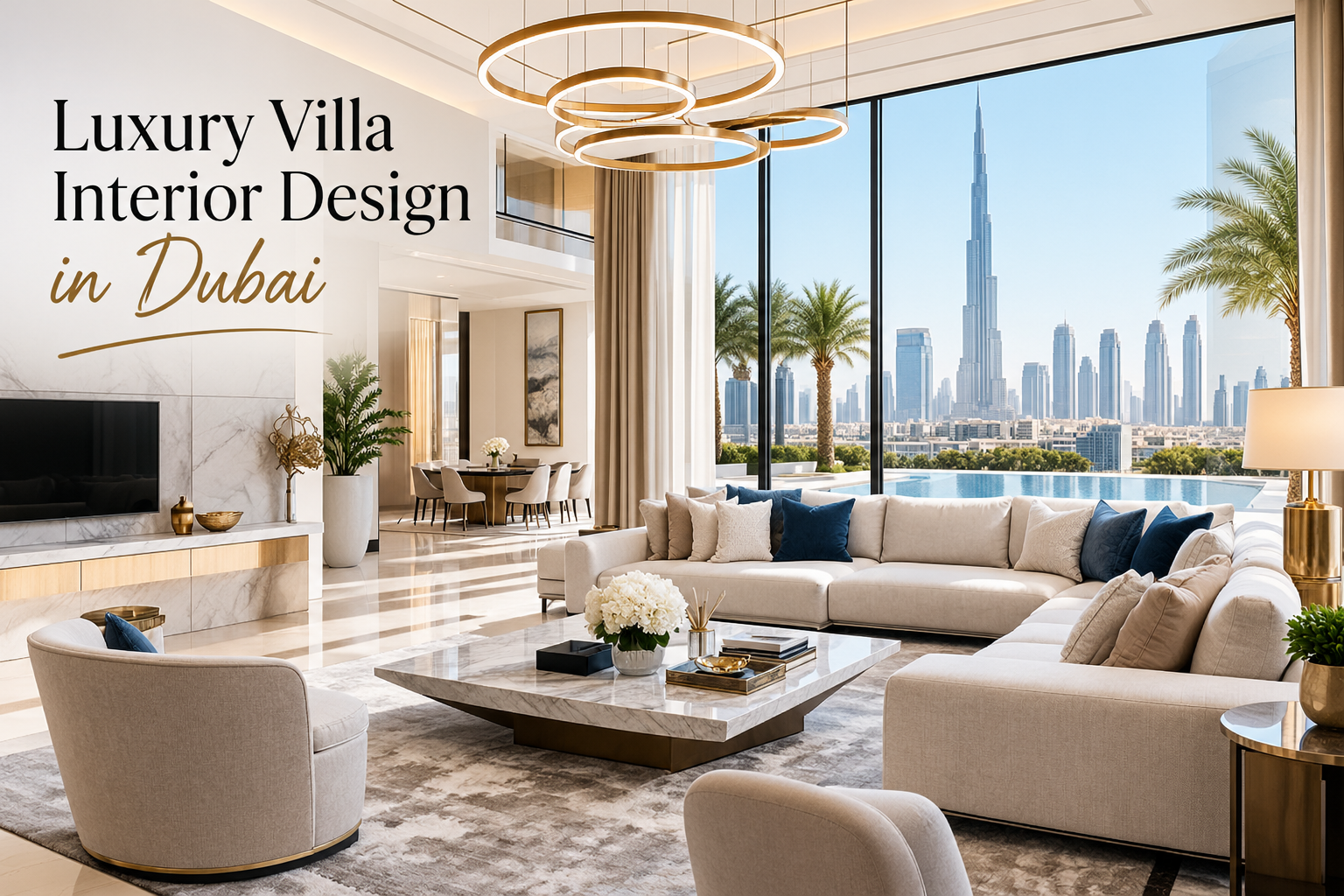
Luxury Villa Interior Design in Dubai: How to Integrate Lighting, Climate and Automation
The best luxury villa interiors in Dubai plan lighting, climate and automation together with the architecture and furniture, so the home feels effortless, stays comfortable through summer and has no visible technology to spoil the design.
Luxury villa interior design in Dubai is no longer only about marble, furniture and finishes. Owners now expect a home that stays cool through a 40°C summer, looks beautiful from morning to night and is controlled from one simple interface, all without visible clutter.
Those results come from planning, not products. When lighting, climate and automation are designed alongside the architecture and interiors, every diffuser, sensor and fixture has a place before the finishes are chosen. When they are added afterwards, the design is compromised and the cost rises.
This guide explains how to integrate the three systems in a Dubai villa: what each one should do, how they work together, a step-by-step process from concept to handover, and the mistakes to avoid.
Quick answer
How do you integrate lighting, climate and automation in a luxury villa interior in Dubai? Plan all three at concept stage with one coordinated team, hide the hardware in the architecture, and run everything through a single control layer built around scenes. In practice, that means:
- Lighting: layered, dimmable light at 2700K to 3000K with CRI 90 or above, and circadian scenes that change through the day.
- Climate: zoned cooling, humidity control, filtered fresh air and automated shading, with diffusers concealed in ceilings and joinery.
- Automation: one wired, standards-based home automation system, a few discreet keypads, and scenes such as Arrival, Dinner and Goodnight.
- Process: merge all drawings early, test a mock-up room, commission the systems with the owners present, and keep full documentation.
Why smart villa design matters in Dubai
Dubai’s climate puts unusual demands on a home. Summer temperatures regularly pass 40°C, sunlight is intense, and many villas combine large glazed facades, double-height spaces and outdoor living areas that flow into the interior. Cooling is usually the biggest energy load, and glare and heat gain shape how every room feels.
In a typical project, the interior designer, lighting consultant, air-conditioning contractor and automation installer work separately. The result is familiar: grilles on a feature ceiling, thermostats on marble walls, scattered keypads and lighting that never feels right. Integration removes these clashes. Cabling, ceiling voids and plant space are reserved once, and the finished interior is calmer, more efficient and easier to live in.
Villa lighting design: layers first, scenes second
Good villa lighting is built from four layers. Ambient light sets the base level through coves and recessed fixtures. Task light supports cooking, reading and grooming. Accent light highlights art, stone and joinery. Decorative light, such as chandeliers and pendants, acts as sculpture and should always be dimmable.
For a luxury finish, specify warm white sources around 2700K to 3000K in living areas, high colour rendering (CRI 90 or above) so materials and skin tones look natural, and smooth dimming to very low levels without flicker. Place drivers in accessible, ventilated locations, because heat shortens their life.
Circadian programming adds real value in a large home: brighter, cooler light in the morning, softer warm light in the evening and a low path light at night. Outdoors, shielded fixtures extend the living space after dark without glare or light spill.
Villa HVAC design: comfort that works with the architecture
Cooling is the system most likely to clash with the interior, so plan it with the designer from day one. Slim linear diffusers, shadow-gap grilles and ceiling coffers let supply and return points disappear, but only if ceiling voids and plant rooms are reserved early.
Zone the villa by use. Give each bedroom suite, majlis, living area, kitchen and staff area its own control logic, so empty rooms are not cooled to guest standard. Control humidity as well as temperature, because the swing between outdoor heat and indoor air-conditioning can cause condensation that harms timber, leather, art and finishes. Add filtered fresh air to manage dust.
Let shading do the first job. Smart blinds, external screens and the right glazing reduce solar gain before the cooling system has to remove it. Finally, confirm whether your community uses district cooling, split, VRF or chilled-water systems, because each has different space, noise and control implications.
Villa automation in Dubai: one control layer, almost no visible hardware
The goal of villa automation is not more gadgets. It is fewer decisions for the owner and a calmer interior. A well-designed system has one control layer that links lighting, climate, shading, audio-video, security and access, and lets owners use it the way they prefer: wall keypads, a phone or tablet, voice commands or automatic schedules.
Three principles keep a smart home interior in the UAE elegant. First, use fewer, better controls: a few engraved keypads in matching finishes replace banks of switches. Second, think in scenes rather than settings, so one press sets lighting, blinds, temperature and music together for Arrival, Dinner, Cinema or Goodnight. Third, wire the core systems and keep wireless for convenience devices, so the villa still works if the internet drops. Choose open standards such as KNX, DALI, BACnet or Matter where possible, and keep full documentation and passwords with the owner.
How lighting, climate and automation work together
The real value appears when the systems respond to each other. On arrival, entrance and path lights come on at a welcoming level, the living zones are already cooled, the gate opens and the blinds adjust. At dinner, the pendants dim to a warm preset, the dining zone holds a steady temperature and the blinds close. At night, a Goodnight scene switches off the downstairs lights, drops the bedrooms to their sleep setting, locks the doors and arms the alarm. When the family is away, blinds close against the sun, cooling setpoints relax, humidity stays controlled and the lighting follows a natural evening pattern.
Luxury villa interior design process: from concept to handover
Integration works best when one team owns the brief. Start by recording how the household lives: how often they entertain, who uses which rooms and how much time they spend abroad. At concept stage, bring the architect, interior designer, lighting designer, MEP engineer and automation specialist together to agree the design language and technical strategy.
Next, merge ceiling plans, joinery details, diffuser and sensor positions and cable routes into one set of coordination drawings, and resolve clashes on paper. Build a mock-up room to test light levels, colour temperature, keypads and blinds before ordering for the whole villa. Finally, commission the systems with the owners present, and hand over complete documentation and training.
Mistakes to avoid
The most common mistake is adding technology after finishes are chosen, which leads to visible grilles and cut walls. Others include cooling the whole villa as one zone, ignoring humidity and dust, relying on an app alone, mixing too many control brands, over-lighting with poorly aimed fixtures, and skipping the mock-up. Each is cheap to avoid at the design stage and expensive to fix afterwards.
Conclusion
A luxury villa in Dubai looks and feels best when lighting, climate and automation are treated as part of the interior design, not as add-ons. Layered light, zoned cooling with humidity control and a single, discreet control layer give owners comfort, efficiency and a home that adapts to how they live.
If you are planning a new villa or a renovation, start by bringing your designer, engineers and automation specialist into the same conversation. Agree the scenes, the hidden-hardware strategy and the coordination drawings first, then choose finishes and furniture around them.
FAQs for villa owners
When should lighting, climate and automation be planned in a villa project?
At concept design stage, alongside the architect and interior designer. Early planning secures ceiling voids, cable routes, plant space and control locations before finishes are fixed.
Does smart home automation spoil the look of a luxury interior?
No, when it is planned early. Sensors, speakers and cooling outlets can be recessed or concealed, and a few well-finished keypads replace many switches.
How can I keep a Dubai villa comfortable and efficient in summer?
Combine shading, good glazing, zoned cooling and humidity control, and let automation run schedules and scenes so empty rooms are not cooled to full comfort.
Which lighting colour temperature suits luxury villa interiors?
Warm white around 2700K to 3000K suits most living and sleeping areas, with high colour rendering (CRI 90 or above) and smooth dimming. Cooler light can be used in task areas such as kitchens and workspaces.
Can I add automation to an existing villa?
Yes, though it is easier and cleaner in a new build or full renovation. Wireless devices and retrofit controls can upgrade an existing villa, but a full wired system usually needs access to walls and ceilings.
Do I need one provider for design, lighting, cooling and automation?
Not necessarily, but one party should coordinate them. An integrator or project manager should hold the integrated brief, drawings and sign-off, so the trades do not work against each other.
Subscribe to our
newsletter.
Get valuable strategy, culture, and brand insights straight to your inbox.
By signing up to receive emails from Motto, you agree to our Privacy Policy. We treat your info responsibly. Unsubscribe anytime.