

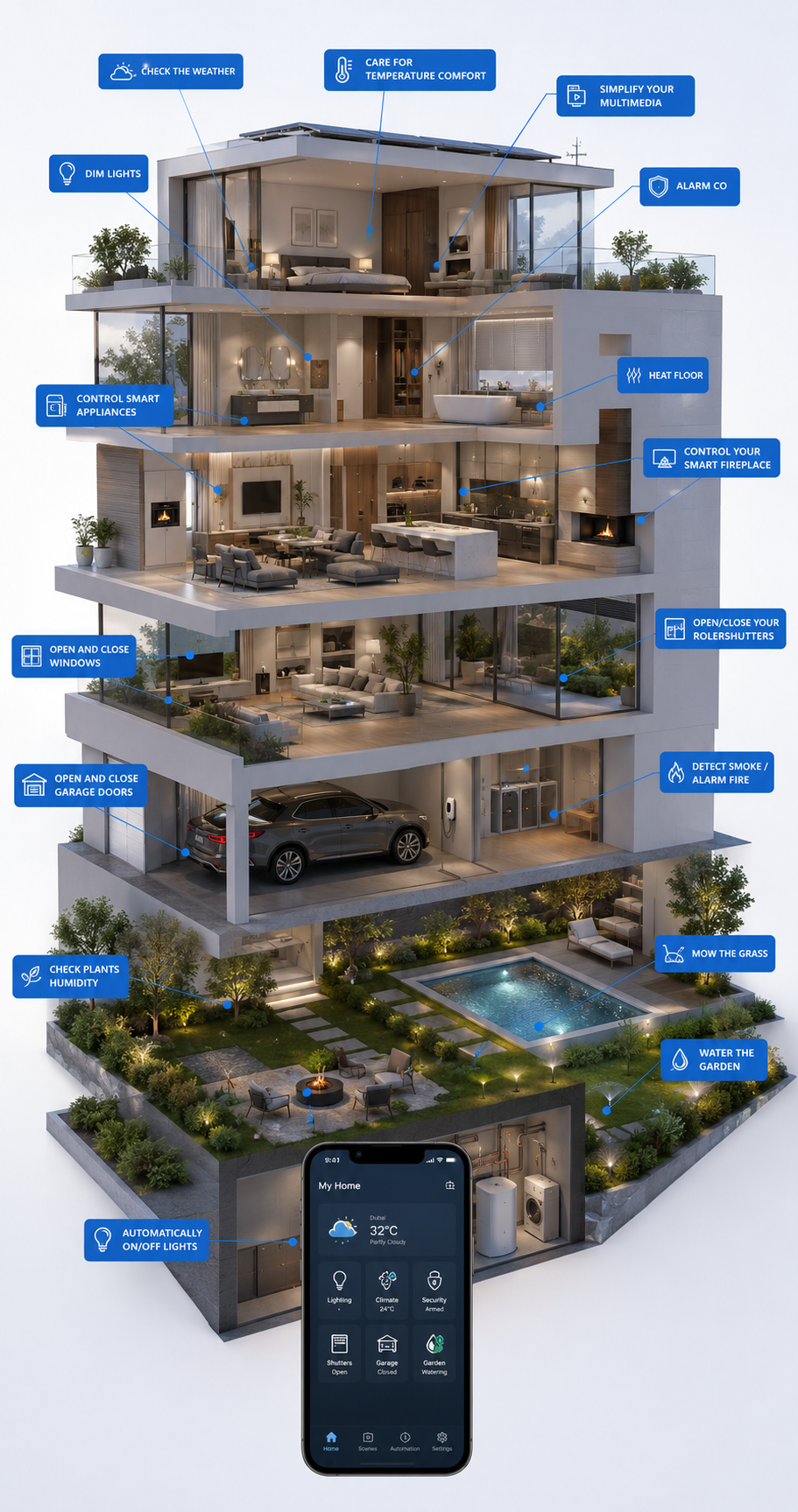
Home Automation During Construction vs After Construction
Homeowners planning a smart home often ask the same question: should home automation during construction be part of the build plan, or can it wait until after move in? The answer shapes everything from budget to wiring to the final experience of living in the home. Here is a clear breakdown of both paths, and why timing changes the outcome more than most homeowners expect.
Why Home Automation During Construction Matters
Installing smart home automation during construction means working directly with the architect, contractor, and electrical team from the ground up.
Advantages of Home Automation During Construction
Wiring can be planned properly. Systems like KNX, DALI, and structured cabling for a whole home network require conduits and cable runs that are far easier to place before walls are closed and floors are finished. This is the core reason home automation during construction produces a more reliable wired backbone rather than a reliance on wireless workarounds.
Every room can be automated without compromise. Lighting circuits, motorized shading, HVAC integration, and audio zones can be designed into the electrical layout from day one, so no room is left out due to access limitations later.
Aesthetics stay clean. Keypads, sensors, and touch panels can be positioned exactly where the design calls for them, with no visible surface conduit or patched drywall.
Long term cost efficiency. While the upfront investment is bundled into the build, retrofitting the same scope after handover typically costs more due to demolition, patching, and repainting.
Considerations
This path requires early planning. The automation company needs to be brought in during the design or early construction stage, not after walls are already up. It also requires coordination between multiple contractors, so a firm with experience managing that handoff matters.
Home Automation After Construction
Retrofitting automation into a completed home is common, especially for owners who move into a property and decide later that they want smart control, or who purchase an existing villa or apartment.
Advantages
No need to wait. Homeowners can start with the systems that matter most to them, such as lighting or security, and expand over time.
Wireless and hybrid systems have matured. Modern retrofit solutions can achieve much of what a wired system does, using protocols that do not require extensive new cabling.
Flexible scope. Automation can be added room by room or system by system, based on budget and priority, rather than committing to a full build out at once.
Considerations
Some limitations are unavoidable. Certain finishes may need to be opened for cable access, and fully wired systems like KNX are harder and costlier to retrofit compared to installing them during construction. Wireless alternatives, while capable, can face constraints around interference, battery maintenance, and network dependency that a wired system avoids.
Which Option Is Right for You
If a home is still in the design or early construction phase, choosing home automation during construction is the more efficient and cost effective route, particularly for larger properties or anyone planning a fully integrated system across lighting, climate, security, and entertainment.
If the home is already built, a retrofit is still a strong option. The key is working with an integrator who can assess the property and recommend the right mix of wired and wireless solutions to match the goals and the budget.
Whether a project is being planned from the foundation up or upgraded after move in, the right automation partner should be able to design for both scenarios. UltiTrend works with architects and contractors on home automation during construction, designing wired systems like KNX from the ground up, and also assesses existing Dubai villas and apartments to recommend the most effective retrofit path, without unnecessary demolition or disruption to daily life.
Frequently Asked Questions
Is home automation during construction cheaper than a retrofit?
In most cases yes. Running cable and conduit while walls are open avoids the demolition, patching, and repainting costs that come with adding the same systems after the home is finished.
Can every smart home system be added during construction?
Most wired systems such as KNX and DALI are best suited to the construction phase, since they depend on structured cabling. Some wireless components can still be added later without issue.
What happens if I want home automation during construction but design changes midway?
This is common on larger builds. Working with an integrator early allows the wiring plan to flex as the design develops, as long as conduits are placed with some flexibility built in.
Subscribe to our
newsletter.
Get valuable strategy, culture, and brand insights straight to your inbox.
By signing up to receive emails from Motto, you agree to our Privacy Policy. We treat your info responsibly. Unsubscribe anytime.