

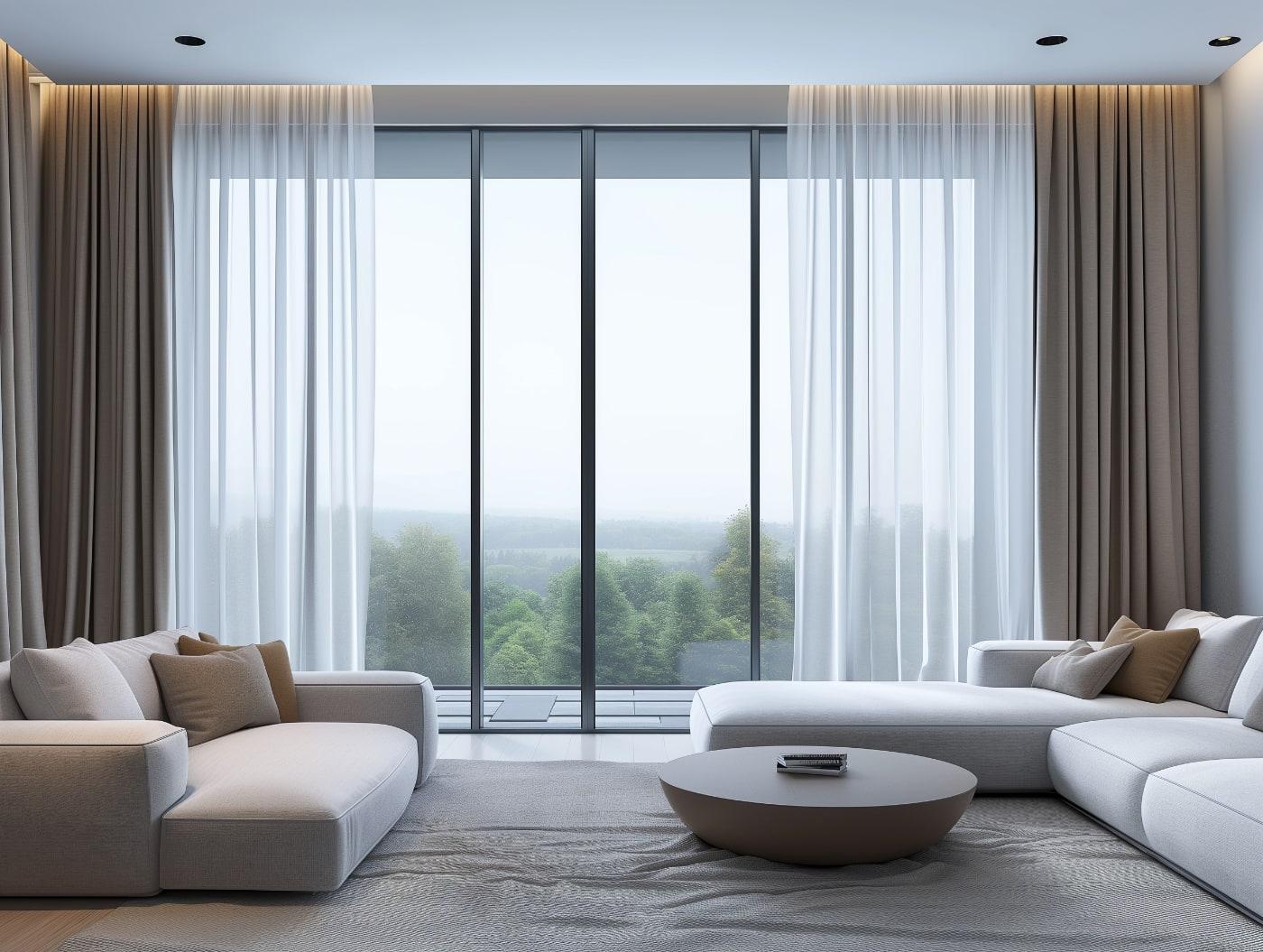
Smart curtains and automated blinds are becoming a practical option for Dubai homes where large windows, balcony doors, floor-to-ceiling glazing, and carefully designed interiors are common. Instead of manually opening and closing every curtain, homeowners can use a wall switch, remote, mobile app, or compatible smart home system to control their window coverings.
But choosing the right setup involves more than selecting a motor. Window size, curtain weight, available power, track design, sunlight exposure, and the way you want to operate the system all affect the final result.
If you’re researching curtains and blinds installation in Dubai, this guide explains the main types of smart window coverings, how motorisation works, what villas and apartments require, and what to check before installation.
Quick Answer: Which Smart Curtains or Blinds Should You Choose?
The right option depends on your windows, interior design, and control preferences.
- For luxury villas: Motorised curtain tracks can suit large windows, double-height spaces, and wide sliding doors. They can be integrated with lighting and other home automation features.
- For apartments: Motorised roller blinds or compact curtain motors may be suitable where space, wiring, and installation access are limited.
- For strong sunlight: Select suitable fabric or blind materials based on glare reduction, privacy, and the amount of daylight you want to retain.
- For smart home control: Choose a compatible system that supports your preferred wall controls, remote, app, or automation platform.
- For reliable operation: Confirm the motor’s capacity, track or blind compatibility, power requirements, and manual operation options before ordering.
For the best result, measure each window accurately and confirm the motor, track, fabric, and control system as one coordinated installation.
What Are Smart Curtains and Automated Blinds?
Smart curtains and automated blinds use electric motors to open, close, raise, lower, or adjust window coverings. Depending on the product, the motor may be built into a curtain track, roller tube, or blind mechanism.
The controls can range from a simple remote to a fully integrated smart home system.
For example, a homeowner might use a wall keypad to close the living room curtains in the evening, set bedroom blinds to a preferred morning position, or operate several window coverings together using a single command.
It’s useful to distinguish between three levels of control:
- Motorised operation: A motor moves the curtain or blind when you use a remote, switch, or other controller.
- Smart control: Compatible equipment allows operation through an app, connected hub, or supported smart home platform.
- Automated operation: The system follows configured schedules, scenes, sensors, or other triggers without requiring a separate manual command each time.
Not every motorised curtain is automatically a smart curtain. If you want schedules, remote access, or integration with other systems, confirm that the motor and controller support those functions before purchasing.
Types of motorised curtains and blinds
Different window coverings suit different rooms and interior styles. The right choice depends on how much light you want to control, the look you’re aiming for, and the practical requirements of the window.
1. Motorised curtain tracks
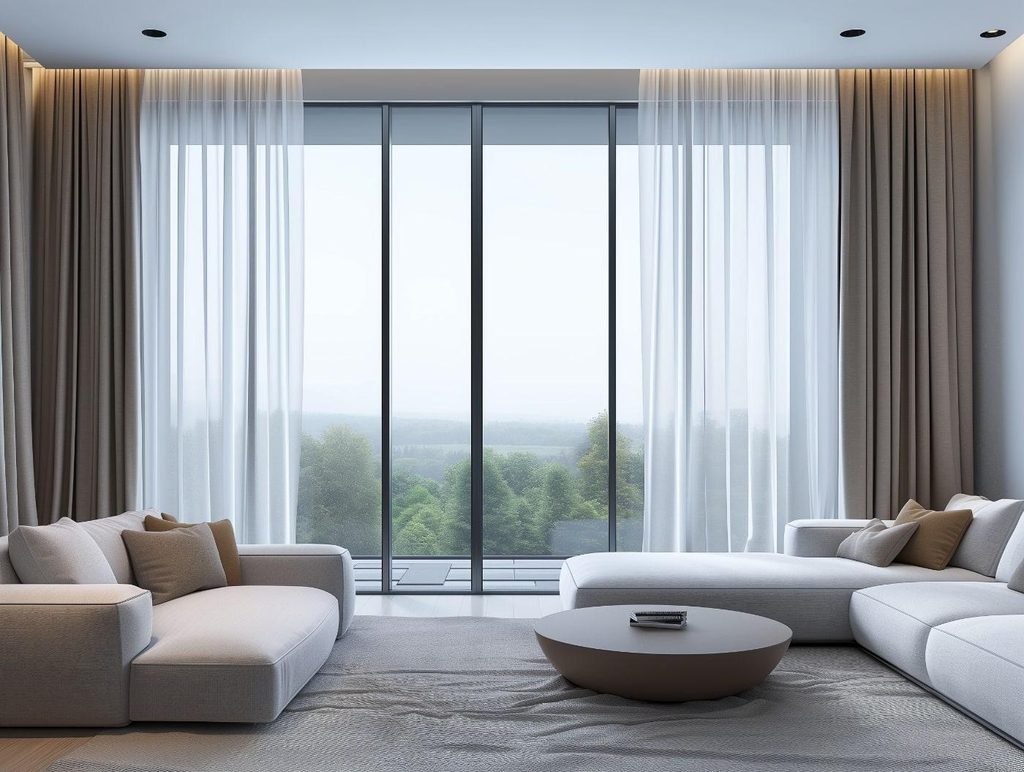
Motorised curtain tracks move fabric curtains along a powered track. They can be used with sheer curtains, blackout curtains, or layered combinations, depending on the track and fabric weight.
They’re particularly useful for wide windows, sliding doors, and large living spaces where moving heavy curtains manually can be inconvenient.
Before installation, check the total curtain weight, track length, stacking space, and whether the curtains should open from the centre or one side.
2. Motorised roller blinds
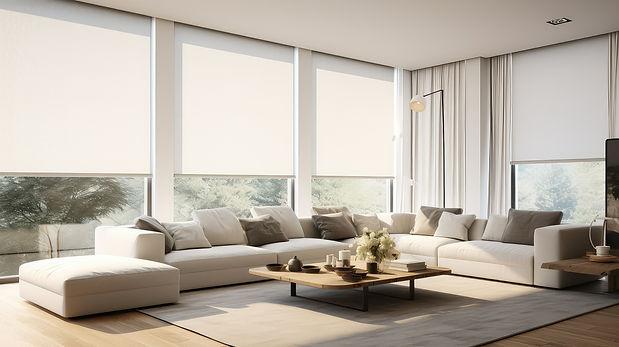
Roller blinds use a motor to raise or lower fabric wrapped around a roller. Their compact design can suit bedrooms, home offices, kitchens, and apartments with limited space around the window.
Fabric selection determines how much daylight passes through. Options may include light-filtering, sunscreen, and blackout materials, but their performance varies by product and installation.
Roller blinds are a useful option when you want a neat appearance without the fullness of traditional curtains.
3. Motorised Roman blinds

Roman blinds fold into horizontal sections as they rise. They provide a softer, fabric-based appearance than roller blinds and may complement bedrooms, formal lounges, or interiors with a more traditional design.
Because the fabric folds and stacks as the blind rises, allow sufficient clearance above the window. Confirm that the selected motor is designed for the blind’s dimensions and weight.
4. Motorised Venetian blinds
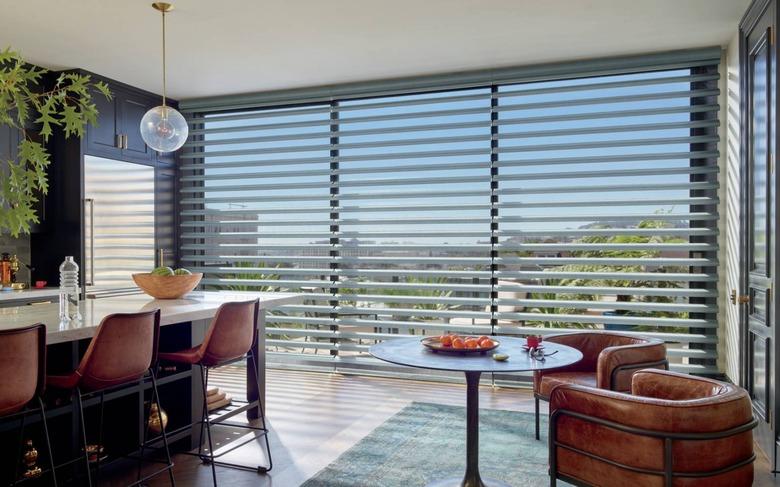
Venetian blinds use horizontal slats that can typically be tilted to adjust light and privacy. Depending on the product, motorisation may support raising and lowering the blind, tilting the slats, or both.
They’re worth considering where adjustable daylight is important, such as in a home office. Check the specific motor’s capabilities because not every product supports every movement.
Smart window coverings for villas
Villas often have a wider variety of window sizes and configurations than apartments. A single project might include double-height glazing, bedroom windows, sliding doors, skylights, and windows facing a garden or pool.
This makes planning particularly important.
Large windows and double-height spaces
Wide curtain tracks need suitable support, an appropriately rated motor, and enough space for the fabric when open. Double-height windows may also require access equipment and careful coordination with ceiling details.
For large installations, ask the supplier to confirm the maximum supported track length, curtain weight, and whether additional motors or track sections are needed.
Layered curtains for privacy and daylight
A villa’s main living area may benefit from two curtain layers:
- A sheer layer for diffused daylight and daytime privacy in suitable conditions.
- A heavier or blackout layer for greater privacy and reduced incoming light when needed.
Each layer may require a separate motor if you want independent control. Confirm this during the design stage rather than assuming a single track can operate both layers independently.
Integration with home automation
In a larger villa, curtains can be coordinated with lighting and other compatible systems. For example, an Evening scene might close selected curtains and adjust the living room lighting.
The exact behaviour depends on the equipment, integration method, and programming. Plan the control requirements before installation so the curtain motors and smart home system can work together.
Smart curtains and blinds for apartments
Apartments often have different constraints, including limited ceiling space, existing electrical layouts, building management requirements, and restricted access for installation.
Motorised roller blinds can work well where a compact design is preferred. Motorised curtain tracks may be better if the interior calls for full-length fabric curtains or layered window treatments.
Before choosing a product, check:
- Available power: Is there a suitable power supply near the window, or is a compatible battery-powered option more practical?
- Mounting space: Can the track or blind be fitted without obstructing ceiling features, window handles, or balcony doors?
- Building rules: Does the building management require approval for drilling, electrical changes, or external-facing alterations?
- Wi-Fi and connectivity: If app or smart home control is important, confirm that the equipment supports the required connection method and that the signal is suitable.
- Access for maintenance: Make sure the motor and other serviceable parts can be reached without unnecessary disruption.
A site survey helps identify these limitations before the product is ordered.
How smart curtain automation works
A typical automated window-covering setup includes the curtain or blind mechanism, a motor, a power source, and one or more control options.
Motor and track or blind mechanism
The motor moves the curtain or blind. Its capacity must match the product’s dimensions, weight, and operating requirements.
Wall switch or remote
Provides convenient local control without requiring a phone or voice assistant.
Smart controller or hub
Enables app-based control, schedules, scenes, or integration when supported by the selected system.
Which control method should you choose?
| Control method | Best suited for |
|---|---|
| Remote control | Straightforward operation of individual curtains or blinds |
| Wall switch or keypad | Everyday control in frequently used rooms |
| Mobile app | Adjusting compatible window coverings from a phone |
| Voice assistant | Hands-free commands with supported devices and services |
| Smart home integration | Coordinating window coverings with lighting or other compatible systems |
| Schedules and sensors | Opening or closing coverings according to configured times or sensor inputs |
For a whole-home installation, consider what should happen if the internet connection or smart home controller becomes unavailable. Ask the installer which functions continue to work locally and how the coverings can be operated manually.
Benefits of automated window coverings in Dubai
More convenient everyday operation
A single control can operate multiple curtains or blinds when the system is configured to do so. This is useful for large windows, multiple bedrooms, and hard-to-reach installations.
Better control over daylight and glare
Adjusting blinds throughout the day can help manage direct sunlight and screen glare. Sunscreen fabrics, sheers, and blackout options offer different levels of light control, so choose according to each room’s orientation and purpose.
Greater privacy when needed
Schedules and scenes can help you close bedroom or living room coverings at preferred times. However, privacy depends on fabric opacity, lighting conditions, and the view from outside; sheer curtains alone may not provide privacy at night when indoor lights are on.
A cleaner interior finish
Motorised tracks can reduce the need for visible cords or manual operating chains. Concealed tracks and planned power connections can also support a streamlined interior, provided they’re coordinated before finishing work.
Coordinated smart home routines
Compatible systems can combine curtains with lighting or other devices. For instance, a Good Night scene could close selected bedroom curtains and switch off designated lights. These actions need to be configured and tested for the property.
What affects installation cost?
There is no single price for curtains and blinds installation in Dubai because the total depends on the product and the complexity of the work.
The main cost factors include:
- Window dimensions: Wider or taller windows may need longer tracks, larger blinds, or higher-capacity motors.
- Fabric and blind type: Fabric quality, blackout properties, lining, and the design of the window covering influence the price.
- Motor specification: Motor capacity, operating features, and the manufacturer’s product range affect equipment costs.
- Power and wiring: Adding concealed power or modifying existing wiring can increase installation work.
- Control requirements: Remotes, wall keypads, hubs, sensors, and smart home integration may add to the overall scope.
- Installation access: High ceilings, difficult mounting positions, and specialised access equipment can require additional labour.
- Number of windows: Multiple coverings may allow some installation efficiencies, but every window still needs appropriate measurement and configuration.
When comparing quotations, ask for a breakdown of the fabric or blind, track, motor, controls, installation, programming, and after-sales support. This makes it easier to compare equivalent specifications rather than choosing solely by the headline price.
How to prepare for installation
A little preparation can prevent avoidable delays and help the finished installation look and operate as intended.
- List the windows. Record the room, approximate dimensions, window type, and intended use of each covering.
- Choose the desired result. Decide whether each room needs privacy, light filtering, blackout performance, or adjustable daylight.
- Confirm the mounting method. Check ceiling and wall construction, curtain pockets, pelmets, and available stacking space.
- Plan power and controls. Decide whether wired or battery-powered equipment is suitable and where local controls should be located.
- Confirm compatibility. Check motor capacity, track or blind type, control protocol, and smart home integration before ordering.
- Arrange a site survey. Have the installer take final measurements and check practical installation requirements.
- Test before handover. Confirm movement, travel limits, controls, schedules, scenes, and manual operation.
If you’re building or renovating a villa, involve the curtain and automation installer early enough to coordinate electrical work and ceiling details.
Common mistakes to avoid
- Ordering motors before confirming the finished curtain weight and track dimensions.
- Assuming every motor supports the same smart home platform.
- Forgetting to allow room for curtains to stack when fully open.
- Selecting blackout or sunscreen fabric without checking the actual light-control requirements.
- Installing controls in inconvenient locations.
- Leaving no practical way to operate the system if a smart controller fails.
- Skipping final testing after installation.
A well-specified system should be simple to operate, compatible with the chosen window coverings, and maintainable over time.
Conclusion: Choose the right smart curtains and blinds for your home
Smart curtains and automated blinds can make a Dubai villa or apartment more convenient, help manage daylight, and provide a cleaner way to control window coverings. The best solution depends on window dimensions, fabric choice, mounting space, power availability, and how you want to operate the system.
Plan these details before installation, especially if you want the coverings to work with lighting or a wider smart home setup. Accurate measurements, compatible motors, sensible control placement, and thorough commissioning are essential to a reliable result.
Planning curtains and blinds installation in Dubai? Contact Ultitrent to discuss your property, window-covering preferences, and smart control requirements. A properly planned installation can help you choose a solution that fits your space and everyday routine.
Frequently asked questions
1. How much does smart curtain installation cost in Dubai?
The cost depends on the number and size of windows, curtain or blind type, motor specification, power requirements, and level of smart home integration. Request an itemised quotation based on a site survey for an accurate estimate.
2. Are motorised curtains suitable for apartments?
Yes. Motorised curtain tracks and roller blinds can suit apartments, provided there is enough mounting space and a suitable power or battery solution. Check building management requirements before making alterations.
3. Can I automate my existing curtains?
Sometimes. Existing curtains may be suitable if the track or mechanism can accept a compatible motor and the fabric weight is within the motor’s limits. Otherwise, the track or curtains may need to be replaced.
4. Are battery-powered curtain motors available?
Battery-powered options are available for some products. Battery life and charging frequency depend on the motor, curtain weight, usage, and battery capacity. Confirm how the unit is charged and whether the battery can be accessed easily.
5. Can smart curtains work with KNX home automation?
They can when the curtain motor, controller, and integration interface are compatible with the KNX installation. Confirm the exact integration requirements with the automation provider before purchasing the motor.
6. Are automated blinds better than curtains?
Neither is universally better. Roller blinds offer a compact appearance and adjustable fabric options, while curtains provide a different decorative finish and can accommodate layered treatments. The choice depends on the room, window, interior style, and desired light control.
7. Can curtains open and close automatically at set times?
Yes, if the selected motor and control system support scheduling. Some systems can also respond to configured scenes or compatible sensors. Ask how schedules behave after a power interruption or controller restart.
8. Do smart curtains need an internet connection?
Not always. Some systems support local controls and scheduled functions without internet access, while remote access and certain integrations may require connectivity. Confirm the capabilities of the specific equipment you choose.